

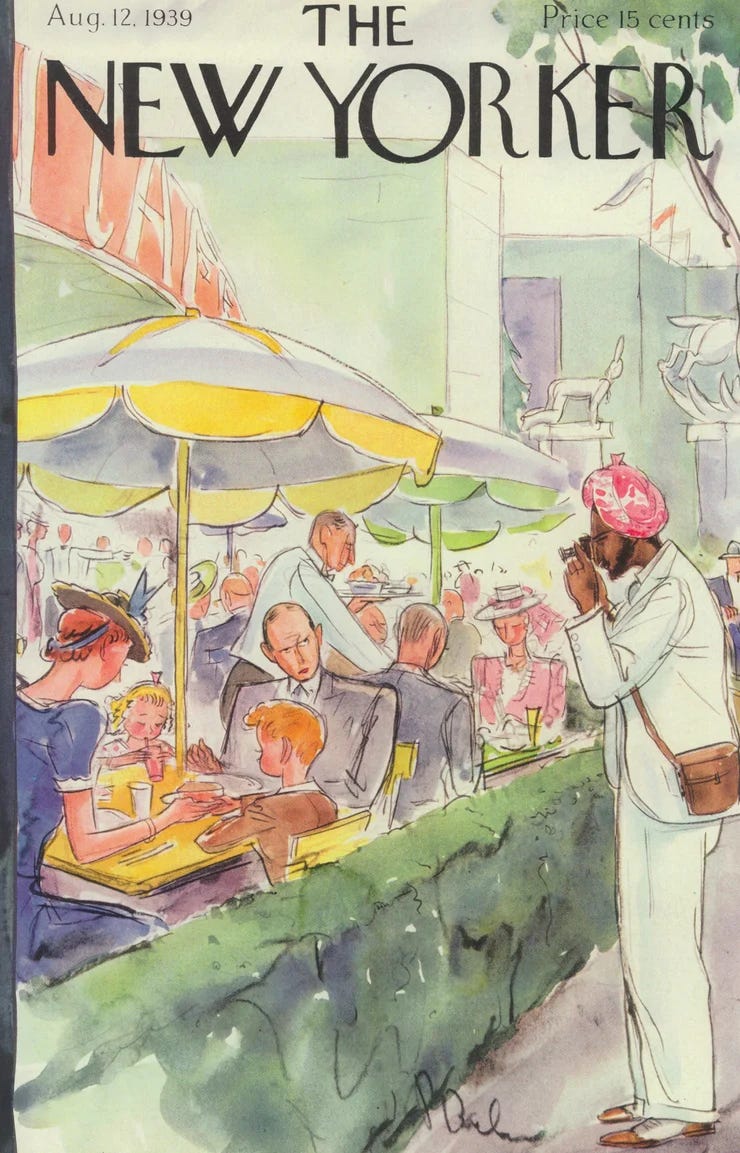
Published in 1939, this New Yorker cover catches the imperial world at the very moment its certainties begin to fray. Beneath the striped parasols, Europe’s well-dressed elite lunch with effortless confidence, seemingly unaware that history is already shifting around them. At the edge stands a Sikh traveller, immaculately dressed, camera in hand - not as a spectacle anymore, but as a traveller, an observer. The stern glance of the gentleman at the table, his raised brow and guarded expression, hints at unease, while the Sikh man remains physically and socially outside the gathering. Whether that exclusion is real or merely perceived is left deliberately ambiguous, but the tension is unmistakable.
It is the old world looking upon the colonial subject with curiosity, caution, perhaps even suspicion. Yet the image quietly inverts the relationship. The traveller is no longer simply being seen; he is seeing. His camera symbolises a profound reversal. The people of empire are no longer silent figures in someone else’s story but educated, mobile observers of the imperial centre.
Within little more than a decade, the imperial order would begin to unravel, and men like him would return not merely as subjects of empire but as citizens, professionals and leaders of independent nations. This illustration therefore captures more than an awkward encounter; it preserves the fleeting instant when the old hierarchy still existed, yet the future had already arrived, standing just beyond the café hedge with a camera in its hands. Travel, opportunity and dignity were soon to be the share of many more ‘subjects’.