

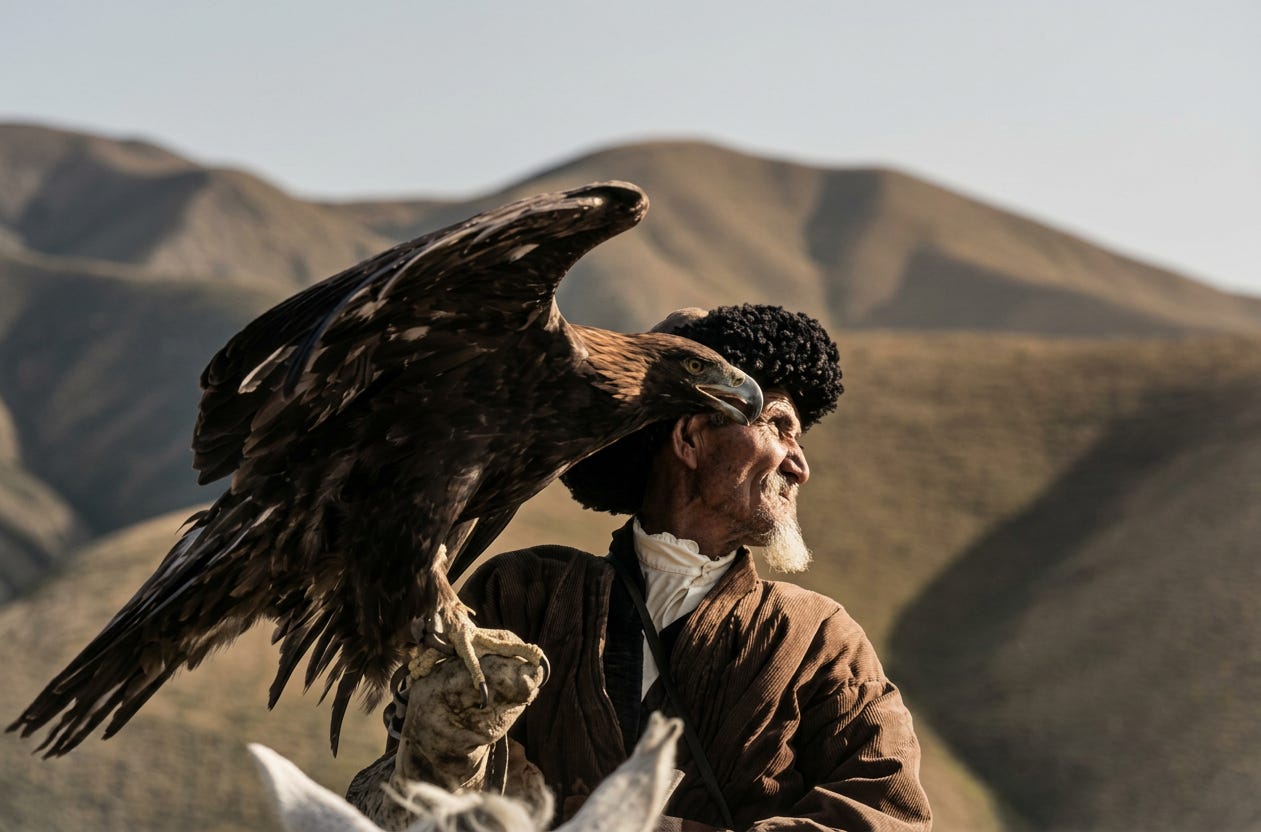
These remarkable color photographs offer a rare window into Central Asia as it existed in a time long gone by, captured more than a century ago, when the vast steppes, mountain valleys, and ancient Silk Road cities still moved to the rhythms of tradition. Most famously, the chemist and photographer Sergei Prokudin-Gorsky first traveled to what is now Uzbekistan in 1907 hoping to observe a solar eclipse from the Tien-Shan mountains. Cloud cover foiled that goal, but the journey was far from lost. Armed with a German-made camera, he wandered the backstreets and ancient centers of Samarkand and Bukhara, capturing scenes unlike any taken before: carpenters at their timber, men grilling meat over coals, locals soaking up the winter sun, and prisoners in Bukhara’s notorious dungeon.¹ He would make three trips to the region, the 1907 eclipse attempt and two more in 1911 after the tsar backed his mission to photograph the Russian Empire, leaving behind more than 200 images of a world little changed for generations.
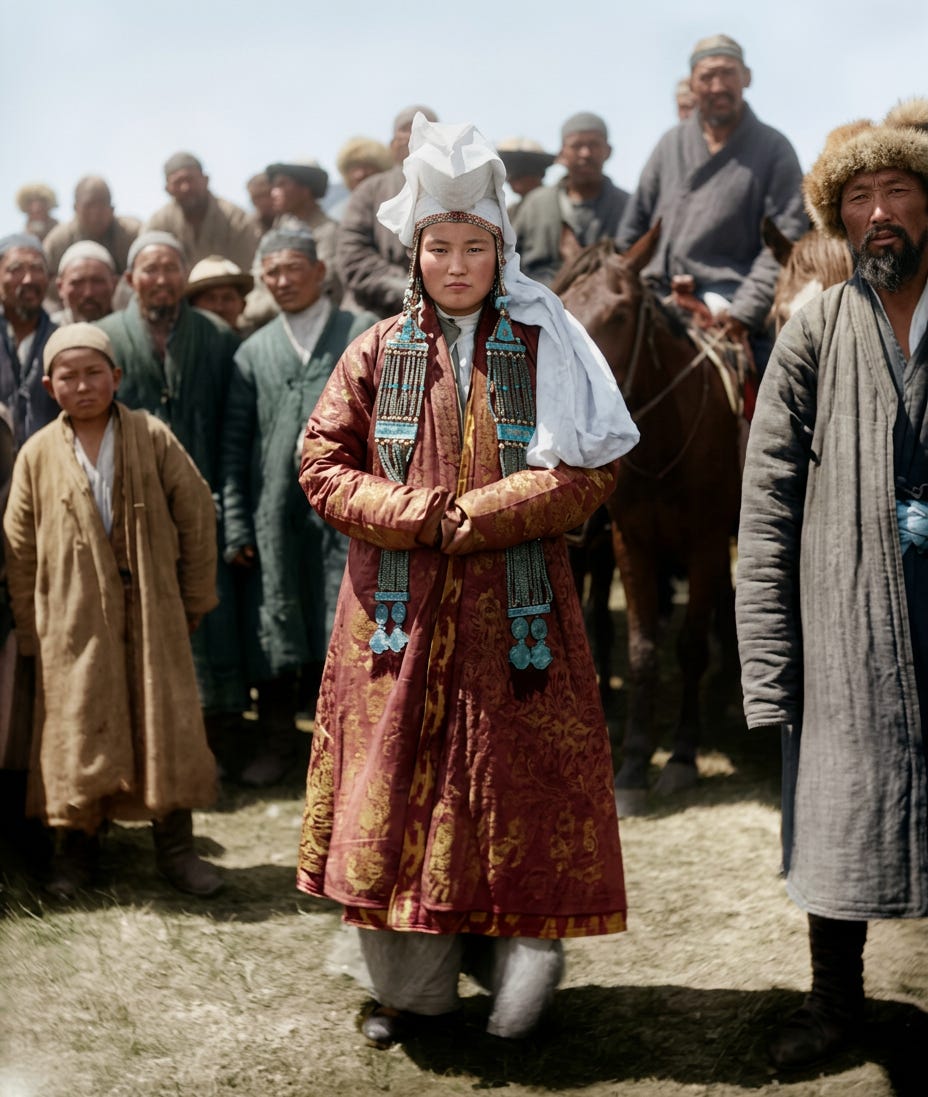
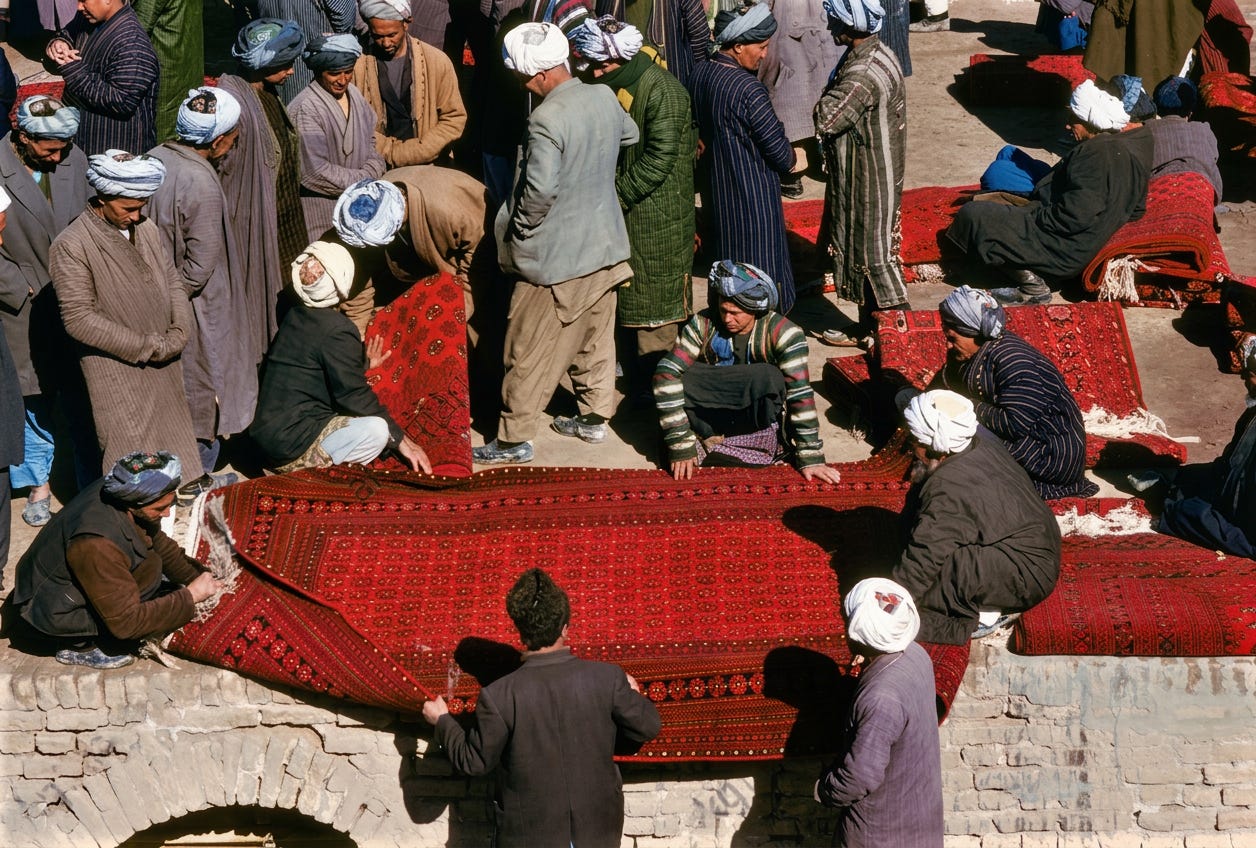
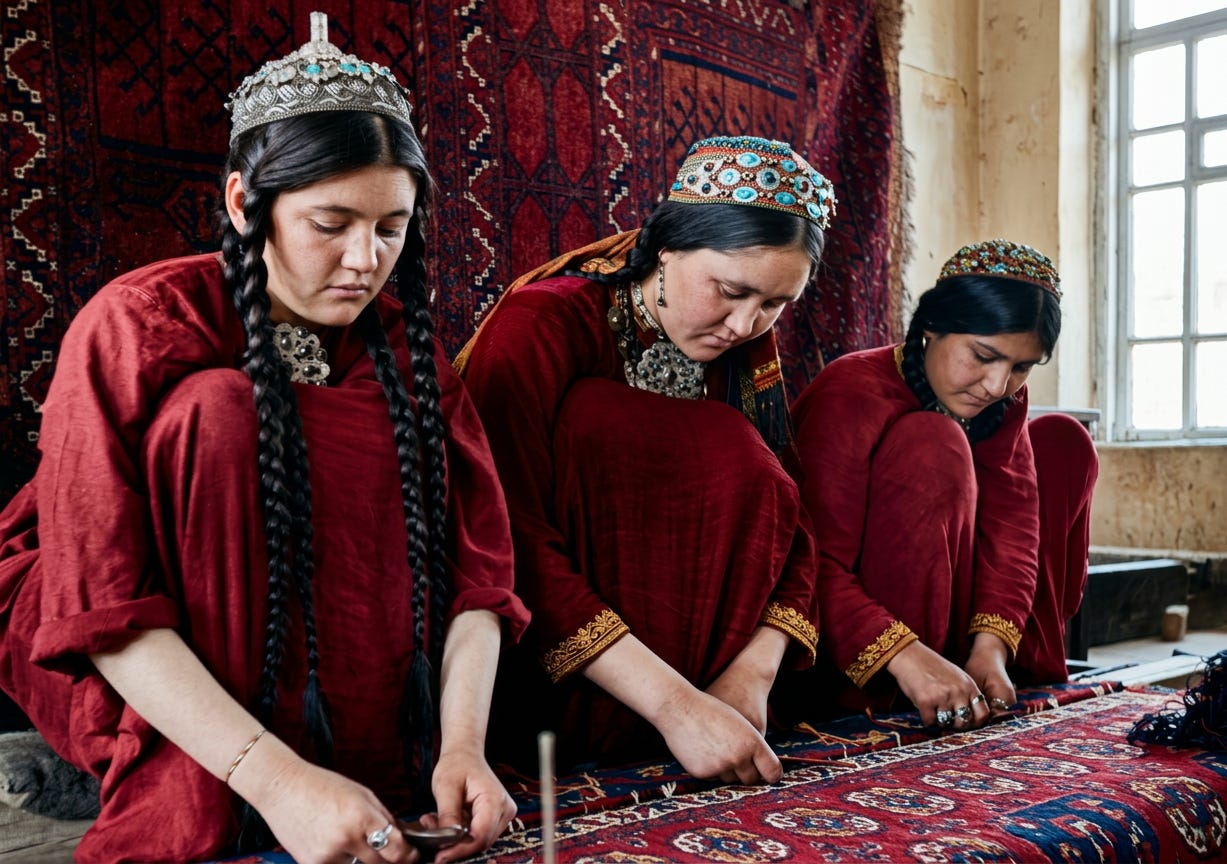
What makes these pictures so extraordinary is their color, a genuine rarity for their era, achieved through an ingenious method in which each scene was shot three separate times through red, green, and blue filters, then recombined to project a full color image.² The rich reds and golds of embroidered robes, the earthy tones of sun-baked walls, and the deep blues of distant mountains feel startlingly immediate, collapsing the distance of over a hundred years. After the 1917 Bolshevik Revolution, Prokudin-Gorsky fled Russia and settled in Paris, where he died in 1944. Soon after, the U.S. Library of Congress purchased 1,902 of his images, including the more than 200 shot in Central Asia, from his relatives, preserving forever these portraits of a proud and resilient people.³


