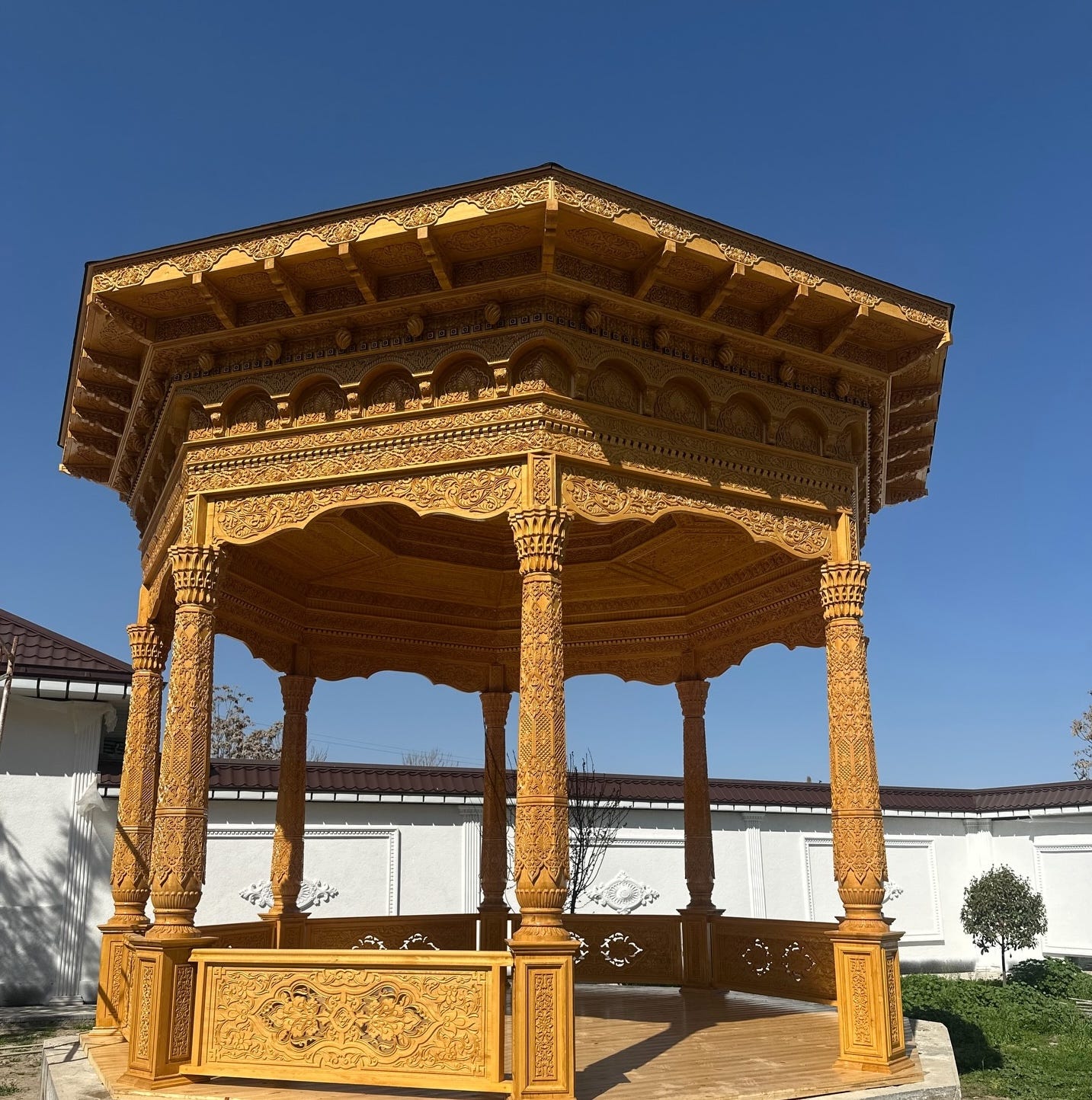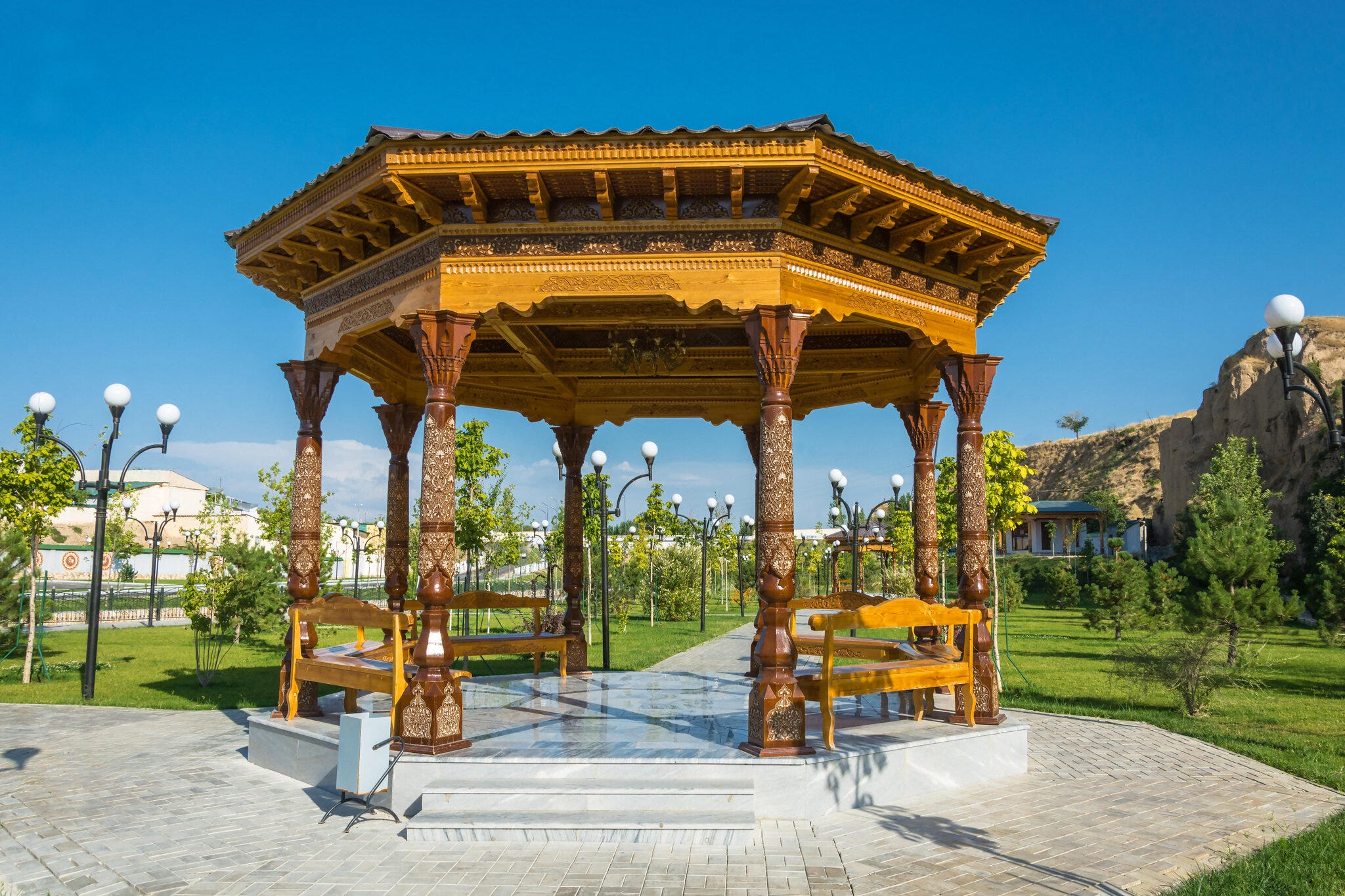
In August 2026, a distinctly Central Asian object entered the landscape of the American capital. According to reporting by Luke Broadwater in The New York Times on August 21, 2026, President Shavkat Mirziyoyev of Uzbekistan donated a set of traditional Uzbek gazebos to the United States, gifts accepted “on behalf of the people of the United States of America.” The structures, the Interior Department’s communications director Katie Martin explained, are “exquisitely crafted aywans,” and visitors will be able to enjoy them later this fall. For a journal devoted to the culture of Central Asia, the arrival of these objects on American soil is a small but telling episode in how the region’s material heritage travels beyond its borders.
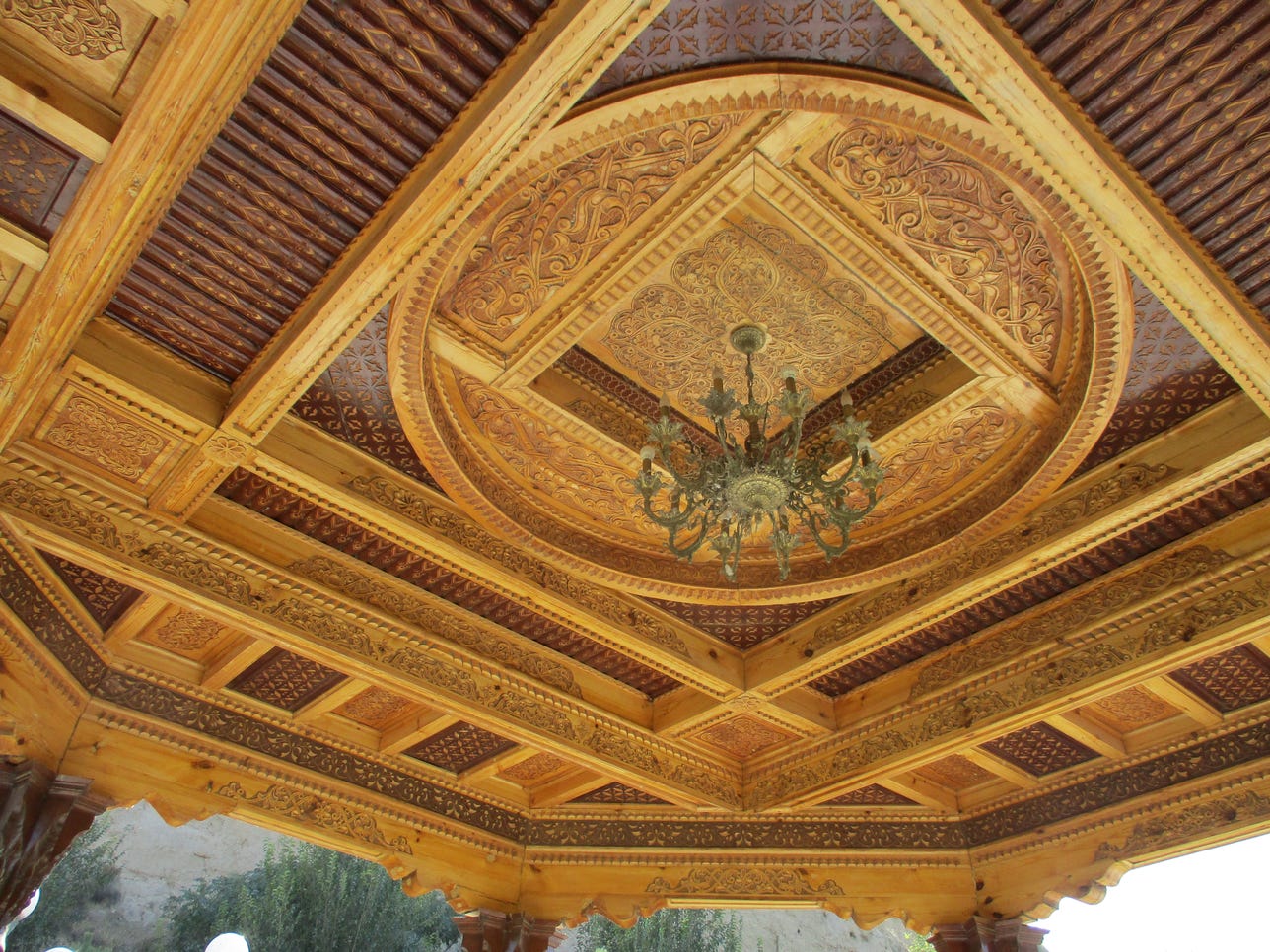
The gazebos are destined for West Potomac Park, an area of mostly sports fields near the National Mall. In the days before the report, trucks carrying large boxes bearing postage labels from Tashkent, the Uzbek capital, were seen arriving at the park. As the article notes, parks in Uzbekistan feature gazebos of this kind, distinguished by their intricate, traditional Central Asian woodcarving. It is precisely this ornamental tradition, carried in crates across continents, that gives the gift its cultural weight: it is a piece of Uzbek public and craft culture transplanted into an American civic space.
The significance of the aywans lies in what they represent as objects of craft. Where other recent gifts arriving in Washington—a luxury jet from Qatar, a pair of leopards from Saudi Arabia—are, respectively, an instrument of wealth and a spectacle of exotic power, the Uzbek gazebos are works of artisanship, carrying the woodworking tradition of Uzbekistan’s parks into a foreign capital. The aywan is a familiar fixture of public life across Uzbekistan, and the intricate carving that distinguishes it reflects a long-standing regional practice of ornamental woodwork. To send such a structure abroad is to send a representative sample of that living tradition.
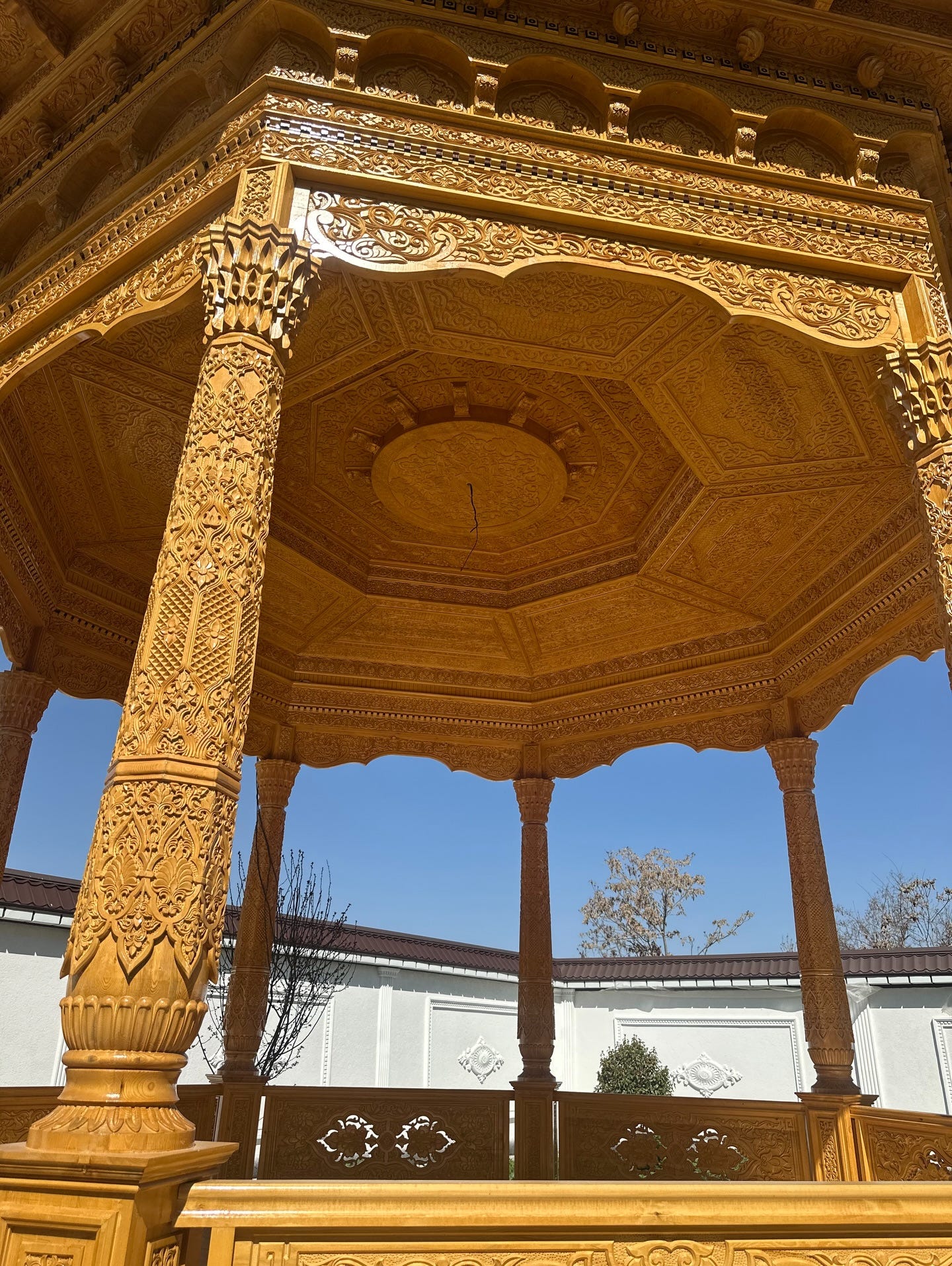
For students of Central Asian culture, this is the salient point. When the crates from Tashkent are unpacked in West Potomac Park this autumn, the American public will encounter an authentic expression of Uzbek ornamental woodcraft—one small measure of how the culture of Central Asia is finding its way to the very heart of Washington. The value of the gesture, read through the lens of art and heritage rather than of the day’s affairs, rests in the object itself: a traditional Uzbek pavilion, crafted in the manner that has long adorned the parks of its homeland, now offered to be seen and enjoyed on distant ground.