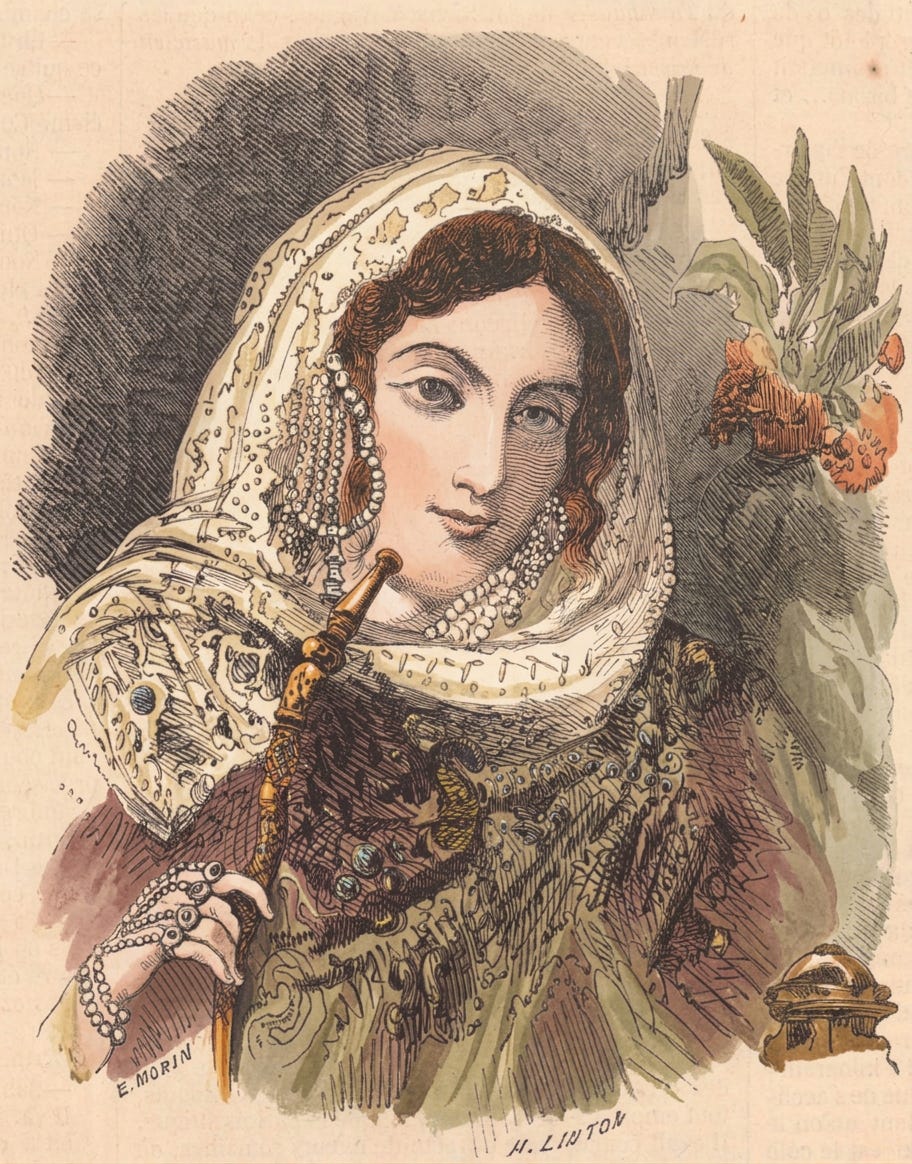
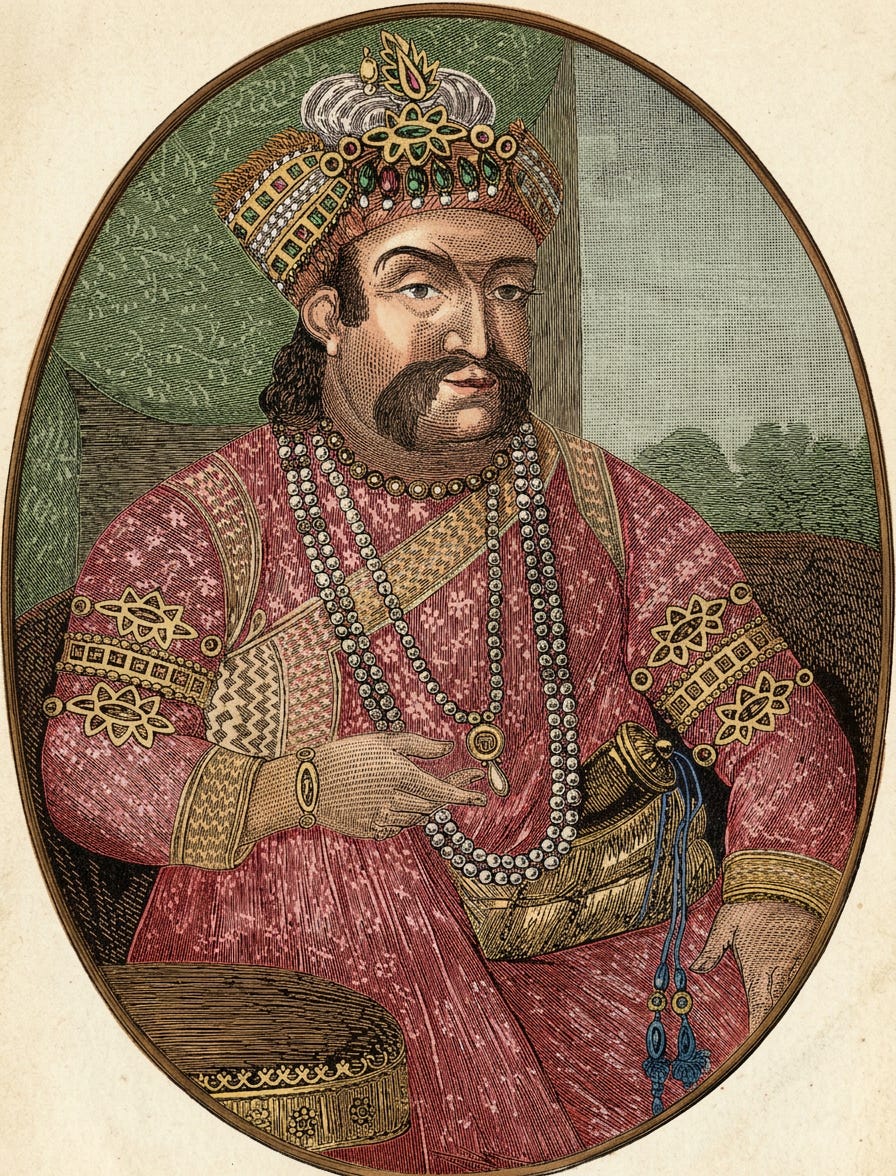
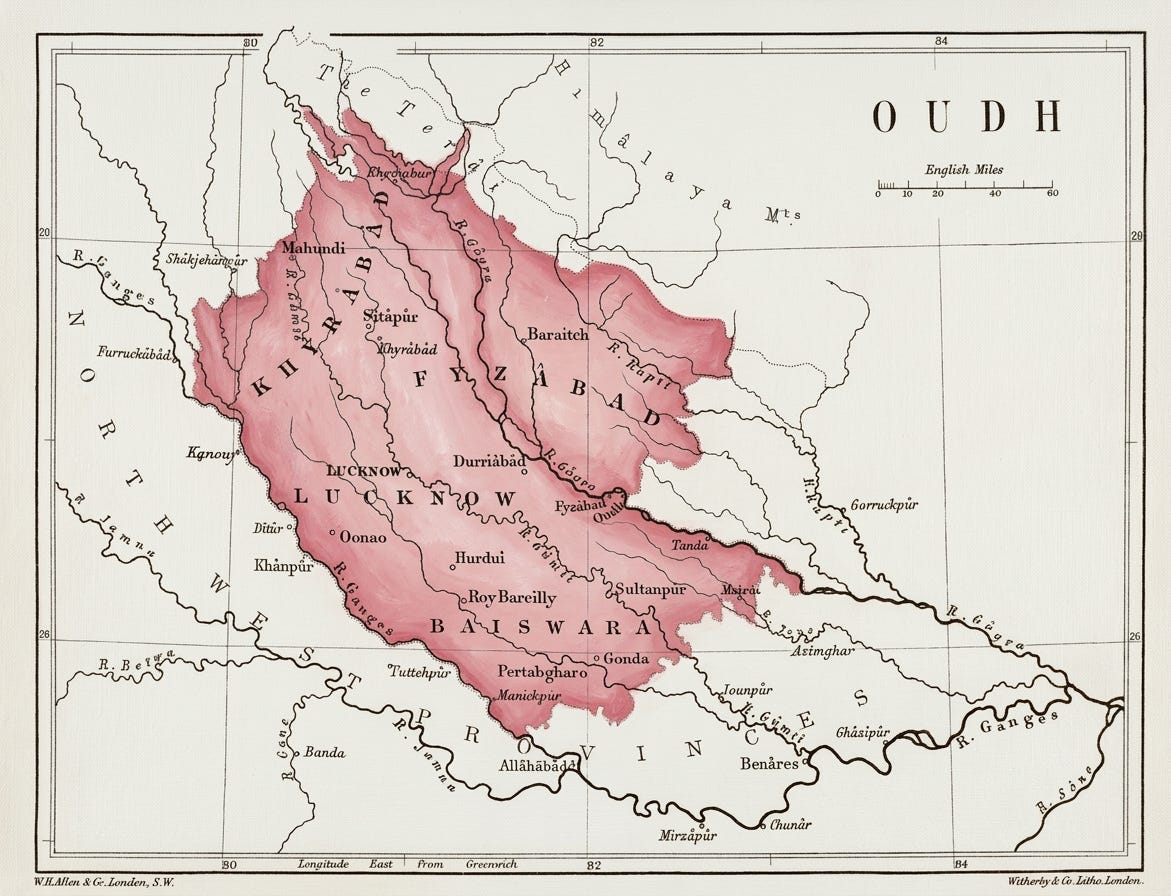
In the mid-nineteenth century, the city of Lucknow shimmered like a jewel upon the plains of northern India. It was the beating heart of Awadh, a kingdom whose court was celebrated across the subcontinent for its riches and its splendour, its domes rising pale and luminous against wide skies, its gardens threaded with quiet pathways. Within its palace walls lived Malika Kishwar, the Queen Mother of Awadh, mother to Nawab Wajid Ali Shah, the last king of that storied land. She had spent her entire life in strict purdah, unseen by the world, her days unfolding behind veils and screens.
Then, in 1856, the fragile peace shattered. On the eleventh of February, the British annexed Awadh, accusing the Nawab of maladministration. Wajid Ali Shah refused to sign the treaty that would surrender his throne, yet he possessed no army to resist. He chose instead the slow and delicate weapon of diplomacy, hoping to appeal directly to Queen Victoria herself. He set out from Lucknow toward Calcutta, but the long river journey left him gravely ill. And so a remarkable decision was made. His mother, along with his brother and his son, would sail to England in his place.
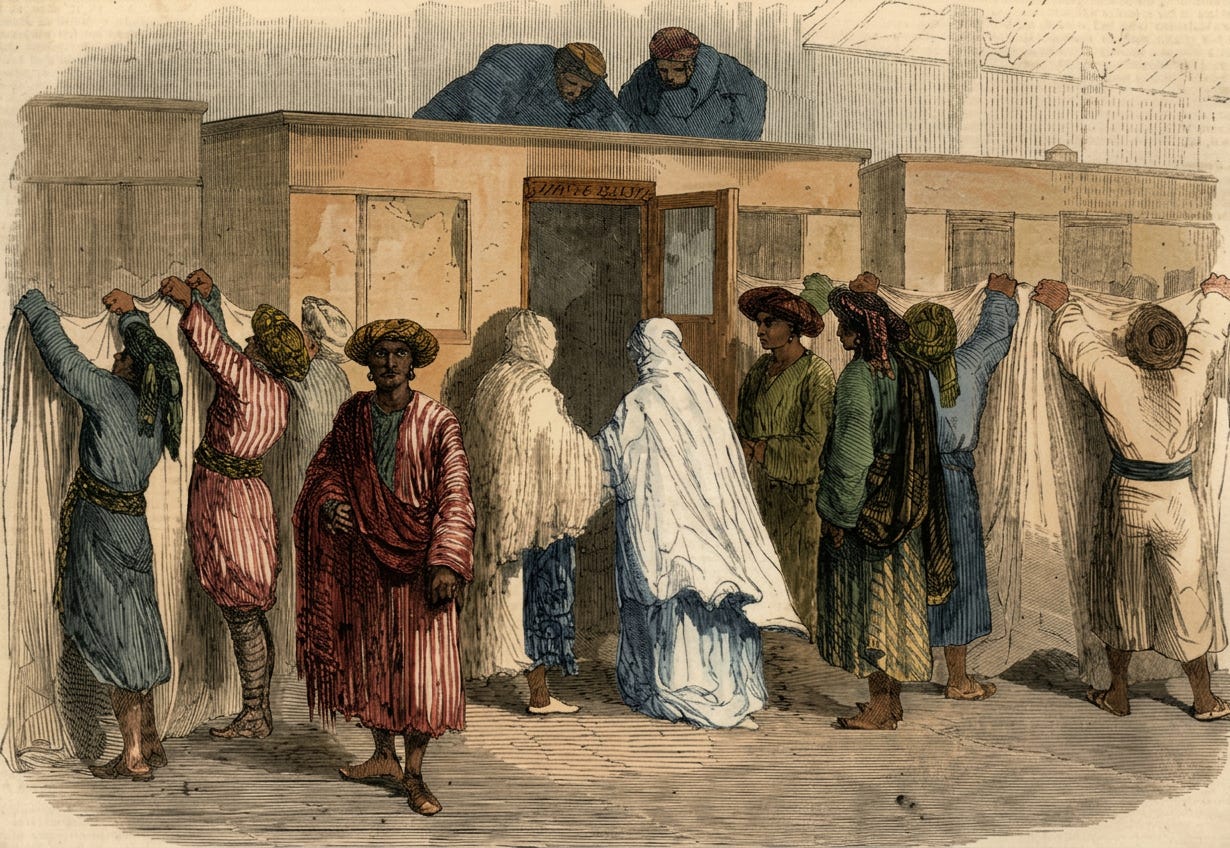
It was unthinkable. A woman who had never been glimpsed by strangers would now cross continents to plead for her son’s kingdom. Yet she chose to go. In June 1856, the royal party departed Calcutta, accompanied by nine maids, one hundred and ten attendants, several bodyguards, and seven eunuchs. They reached Southampton on the twenty-first of August, and their arrival caused a sensation, the British press trailing the entourage with fascination. Even boarding a train became an ordeal, for no one could be permitted to see her. When station authorities refused to close the platform, her servants improvised, forming a human corridor of calico sheets held aloft between her carriage and the train, a scene so extraordinary that illustrators captured it for the papers.
Reaching London was only half the struggle. For nearly eleven months she waited, until at last, on the fourth of July 1857, she met Queen Victoria at Buckingham Palace. But by then the world had shifted beneath her feet. Back in India, the great Uprising of 1857 had erupted, and Awadh had become one of its fiercest centres. Her daughter-in-law, Begum Hazrat Mahal, was leading the resistance in Lucknow, while Wajid Ali Shah sat under arrest in Calcutta. The mission had collapsed. There was nothing left to negotiate.
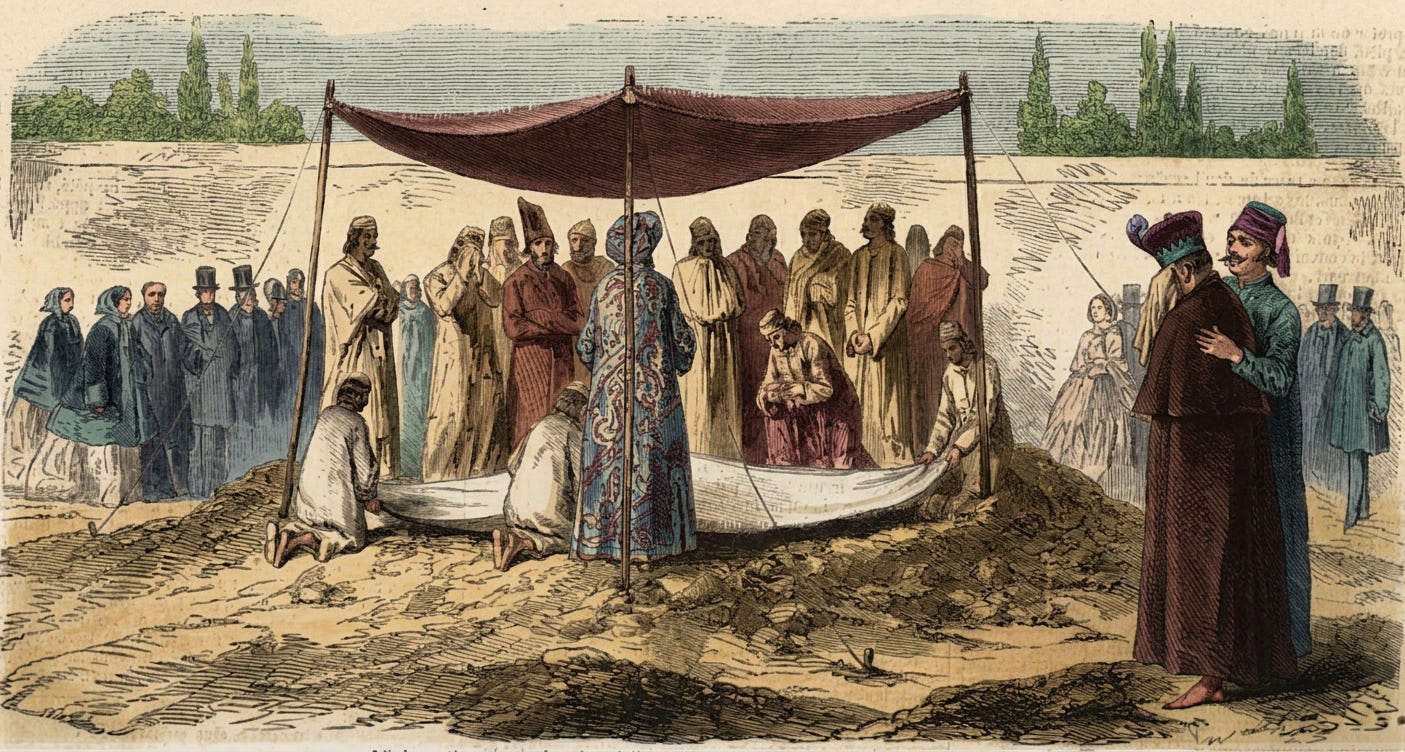
After nearly two years abroad, the delegation turned homeward. She had travelled thousands of miles to save Awadh, and she was returning with nothing. She reached Paris on the twenty-third of January 1858, and the very next morning the ailing Queen Mother died. She was laid to rest in the Muslim section of Père Lachaise Cemetery, her grave slowly surrendering to neglect and time. She had stepped from behind the veil to save her son, and instead died far from home, alone, her story now known to almost no one.