

High among the gorges where the trails of India strain upward toward Chinese Turkestan, the scenery is magnificent beyond the reach of ordinary words. Peaks of twenty thousand and twenty-five thousand feet rise sheer above the track, their shoulders clad in ice fields and shining glaciers, their lower slopes rocky and broken, tumbling into valleys where the air is thin and the light falls hard and clear. It was into this austere and dazzling world that an unlikely wanderer carried his sketchbook, a Russian émigré named Alexandre Iacovleff, whom John Singer Sargent once called “one of the greatest living draftsmen.” He had come as the official artist of the Croisière Jaune, André Citroën’s trans-Asian crossing of 1931 and 1932, the Asian successor to that earlier African venture, the Croisière Noire, on which National Geographic’s own Maynard Owen Williams had ridden in 1924.
The road to this frontier is not lightly traveled. Two passes lead into Chinese Turkestan, the Kilik and the Mintaka, lying close together like two gates in the same wall of mountains. The Kilik is the easier of the two, yet impassable early in the season, sealed by snow until late June. The approach to the Mintaka winds through a rocky valley so barren that no fuel can be found along its length, and so each coolie climbs with a few small pieces of wood lashed to his back, carrying with him the very means of warmth and fire. To cross the Mintaka in April is to wade through deep snow at fifteen thousand four hundred and thirty feet, a hard day’s work owing to the altitude, before the land relents and the descent falls away toward the Pamir, down a valley where the snow melts early in the spring.
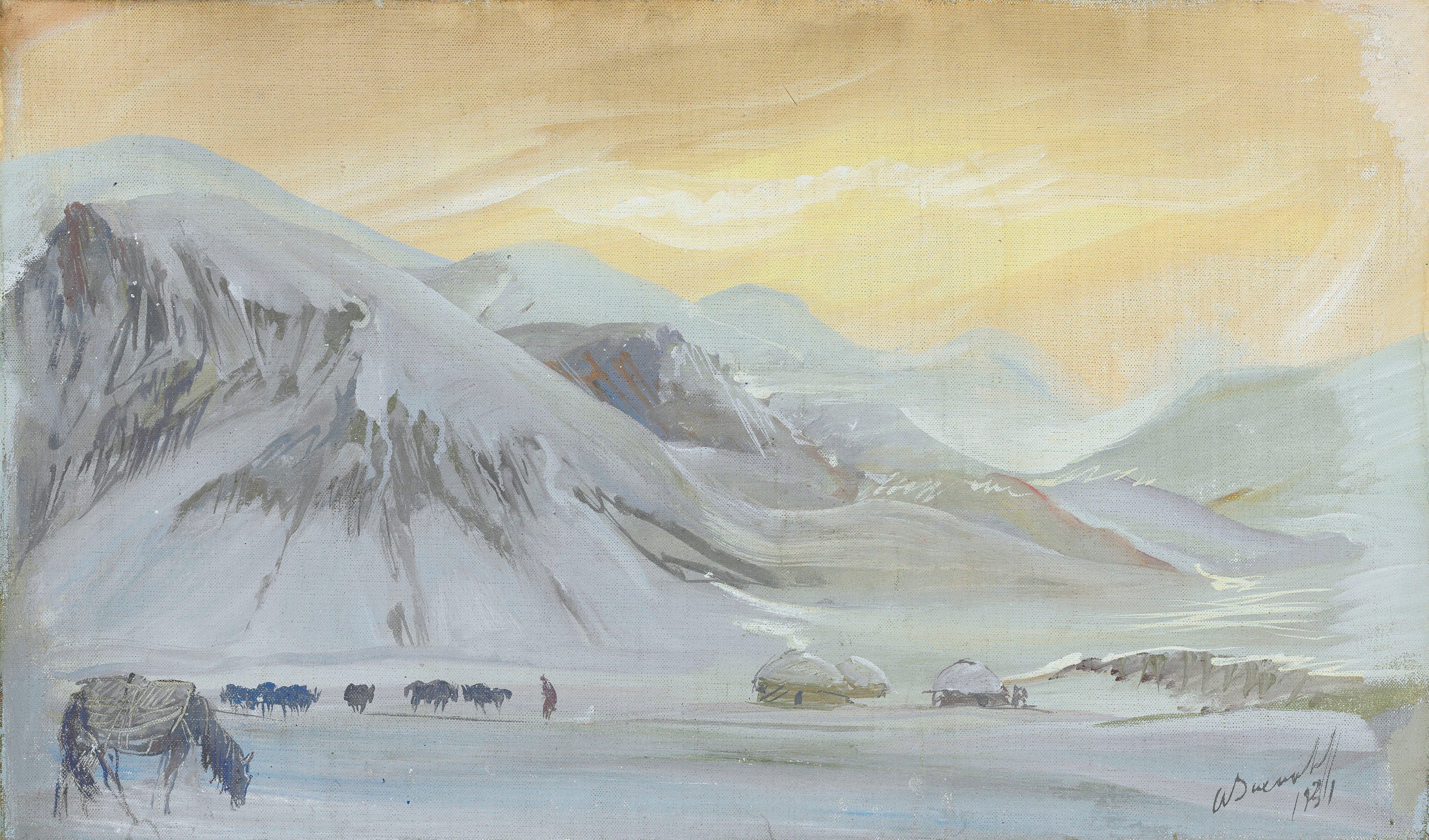
The name Pamir comes from the Persian, Pai-Mir, meaning the foot of the mountain peaks, and the Pamirs themselves are elevated valleys of varying width, divided by roughly parallel ridges and cut through by smaller, narrower glens. There are eight of them in all, scattered across the frontiers of three realms. One, the Taghdumbash, lies in Chinese territory, where there dwells a race of Aryan people, the Sarikolis, believed to have come long ago out of Afghanistan. They have lived in that high country for many generations, a largely agricultural people, few in number yet regarded as a higher type than many of the inhabitants of central Asia, and the district they call home is known as Sarikol.
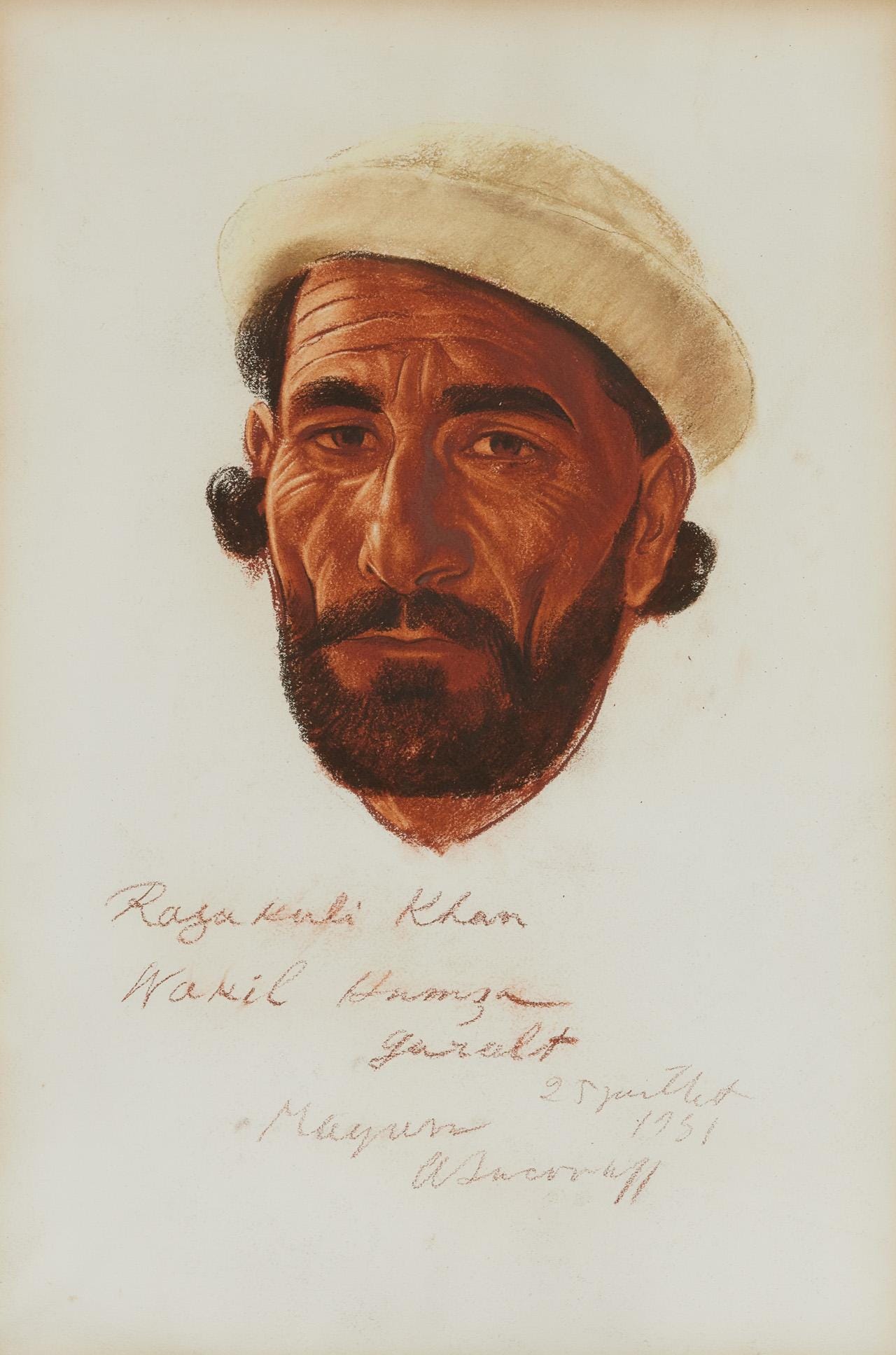
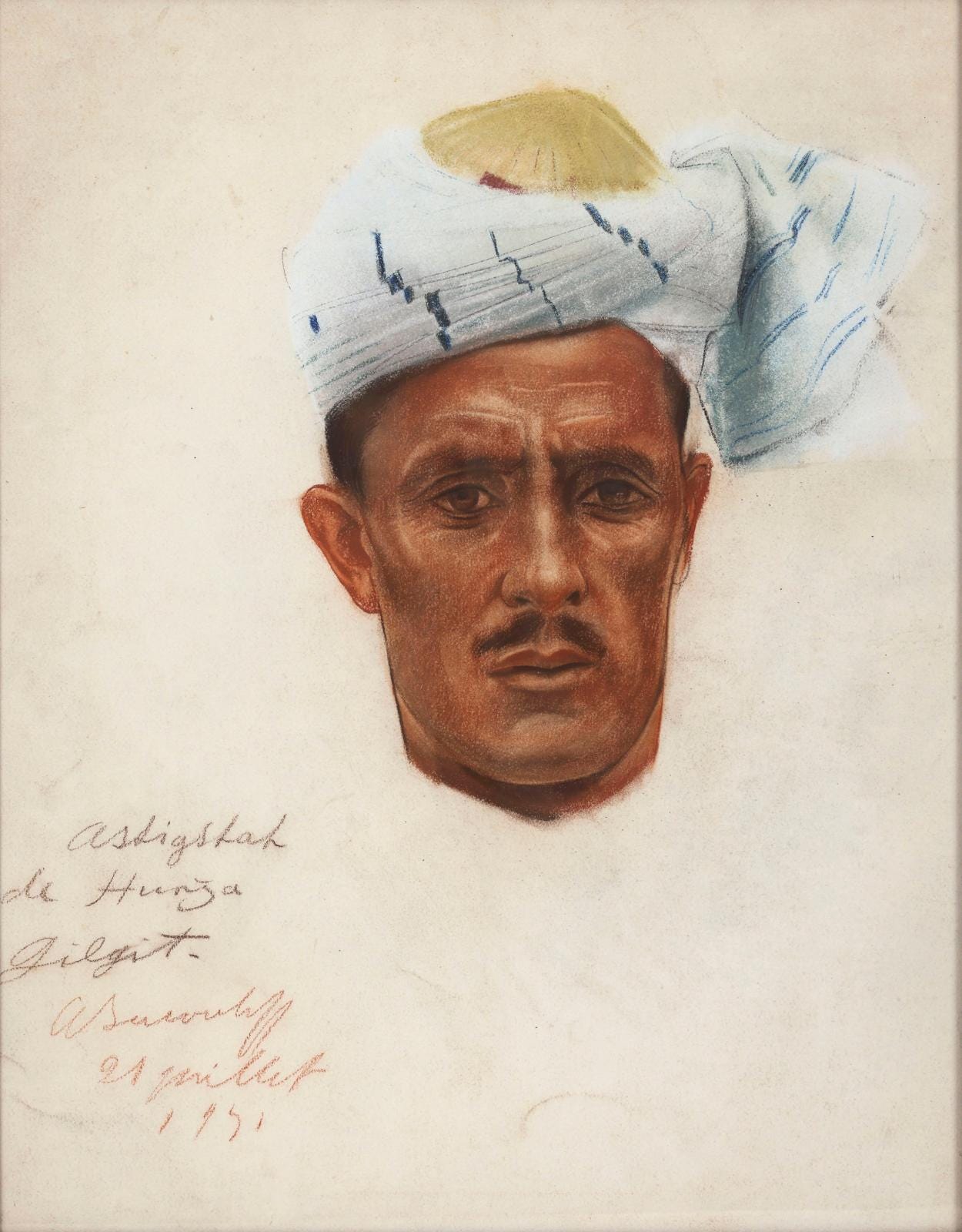
Nearer the Indian approaches lie the small states of Hunza and Nagar, now under the protection of the Government of India and peopled by a race known as the Kanjutis, tall and fair and quite evidently of Aryan stock. There was a time when the main industry of Hunza was something far darker than farming, for its people made their living by raiding caravans along the trade route between Ladakh and Turkestan, over the great Karakoram Pass. That old and perilous commerce was finally brought to an end by an expedition of the Government of India in 1891, and since that day the people of Hunza and Nagar have been friendly, pleasant and likable, sturdy mountaineers who carry themselves with an erect bearing and meet the stranger with a direct and unflinching gaze.
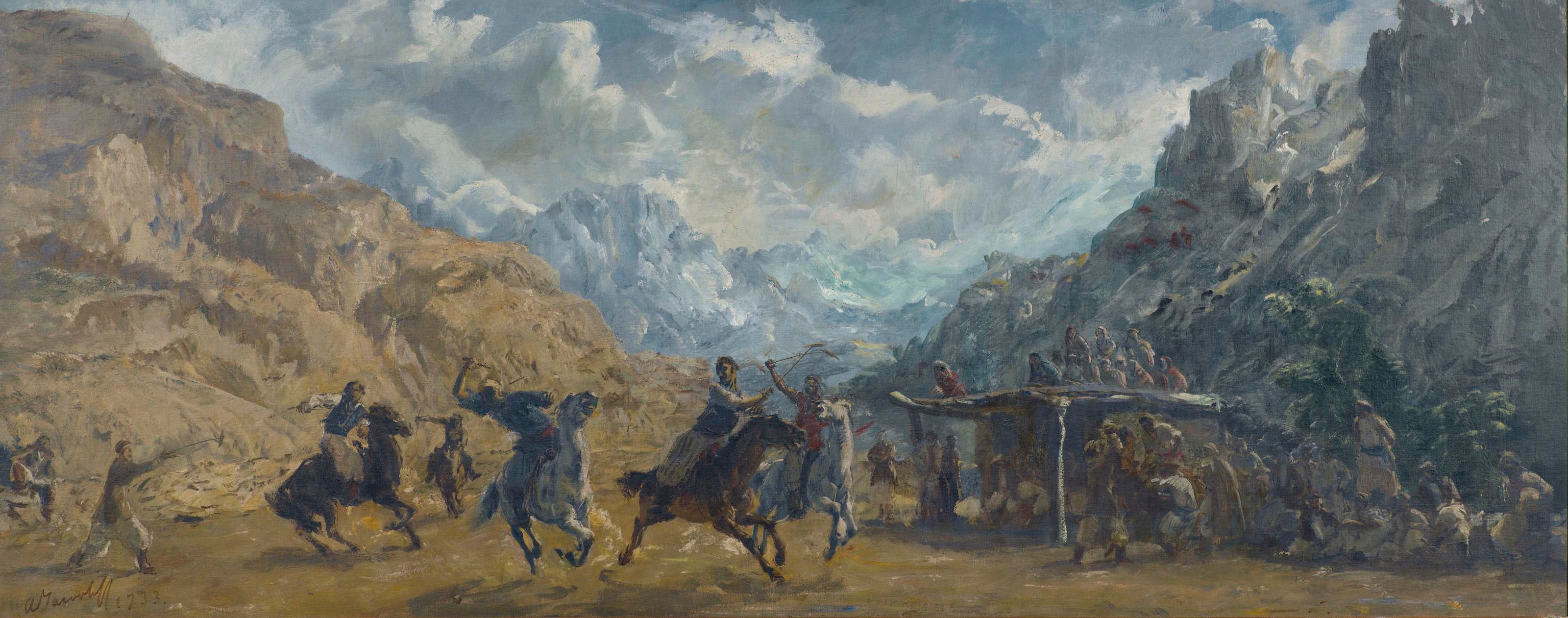
At Baltit, the capital of Hunza, the Mir, Mohammed Nazim Khan, received his visitors and gave them shelter for a night, claiming that his own family had entered the country from Persia some six hundred years ago. And with that distant Persian inheritance came a gift that still animates these mountains, for polo, the national game of Persia in the Middle Ages, has remained the favorite game of the people of Hunza for generations beyond counting. The Mir entertained his guests at dinner and did everything in his power to speed them on their way, for in that country all labor for transport is conscripted, the men paid for their toil, and no traveler could hope to cross such terrain without the help of the government and the goodwill of its chiefs.
Four more marches carried the party onward to Misgar, where fresh coolies were taken on for the three remaining stages into Chinese territory. Misgar marks the northern end of the India Government telegraph line, a slender thread of communication maintained for the British consul general in Kashgar, to whom, from this last outpost, telegrams are carried onward by dak runners, the long journey taking twelve days. It was here, beneath the towering ice-hung peaks, that Iacovleff watched the horsemen wheel and charge across the rough ground in the ancient Persian game, and bore the vision home with him to Paris. There the memory ripened into one of his finest canvases, a polo game at Misgar, painted far from the mountains yet alive with their thin bright air, standing today among the treasures of the National Geographic Society as a culmination of his journey and a window, forever open, onto the roof of the world.

