

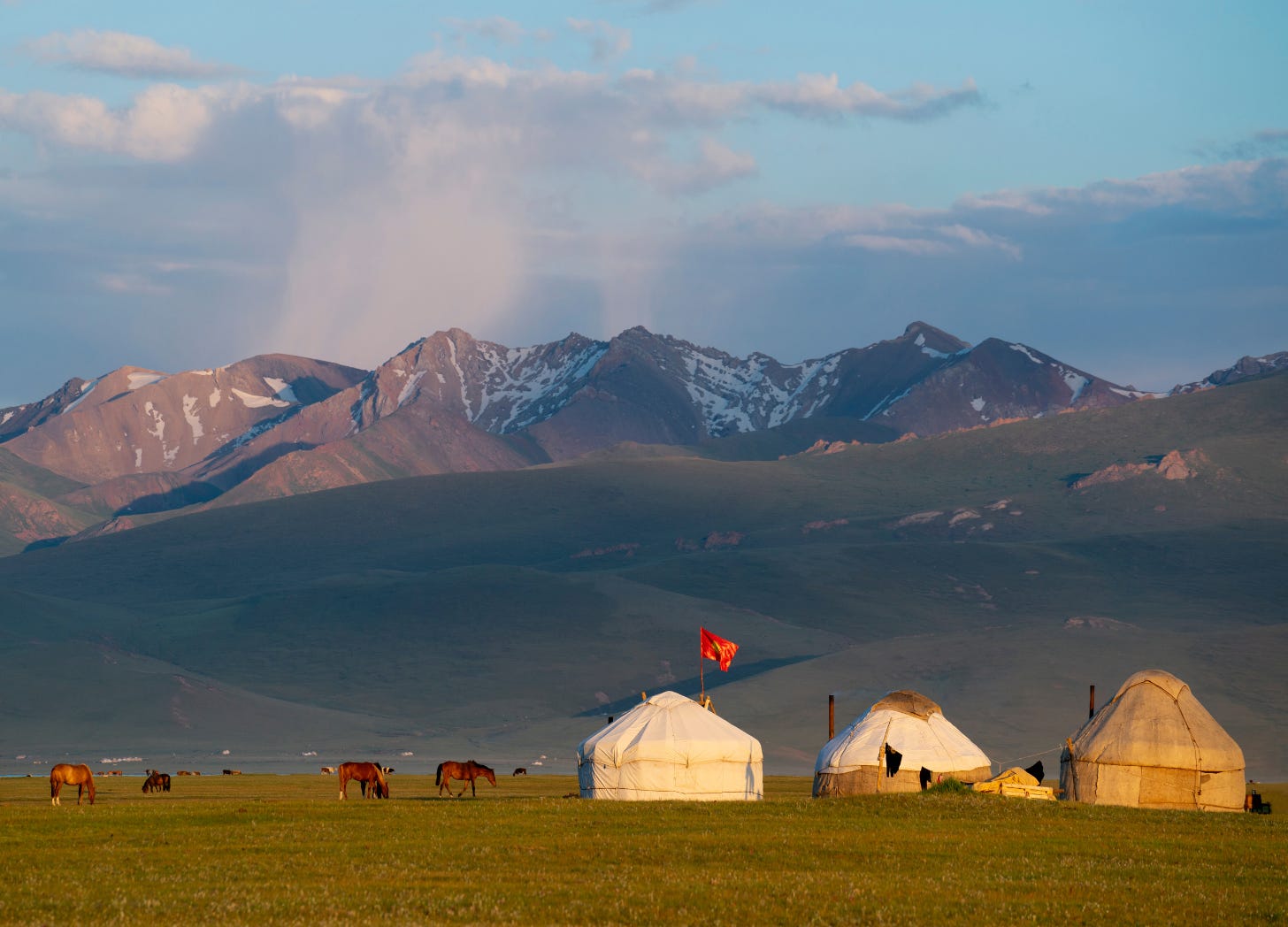
There are towns you pass through, and there are towns that pass through you. Karakol, cradled at the eastern tip of Kyrgyzstan’s Lake Issyk-Kul beneath the snow-hung wall of the Terskey Alatau, is emphatically the latter. It is a place where Russian gingerbread cottages line quiet, tree-shaded streets; where apple orchards perfume the air each autumn; and where the great central Tian Shan rises just beyond the last row of houses, promising glaciers, hot springs, and some of the most spectacular high-mountain trekking on earth.
For readers of the Journal of Geography, Art & History, Karakol is that rare destination where all three of our disciplines converge in a single, walkable, endlessly photogenic town. This is why we have made it the centerpiece of our new Kyrgyzstan itinerary.
A Frontier Built on a Checkerboard
Karakol’s story begins in the 1860s, when a Tsarist military garrison scouted the eastern shore of Issyk-Kul and found what soldiers rarely do: paradise. Mild climate, rich soil, valleys full of hot springs, mountains full of promise. The town was formally founded on 1 July 1869, laid out — as the surveyors of the age loved to do — in a neat European checkerboard of streets. Its early population skewed heavily toward officers, merchants, professionals, and explorers, and that cosmopolitan, frontier character lingers to this day.
The very name carries the marks of its people. Kara-Kol — “black hand,” or “black wrist” — is said to recall the hands of the immigrant Russian peasants, stained dark by the valley’s fertile earth. In Soviet times the town was renamed Przhevalsk, after the explorer Nikolai Przhevalsky, whose final expedition ended here and who lies buried by the lakeshore just outside town.
A Living Gallery of Faiths and Architecture
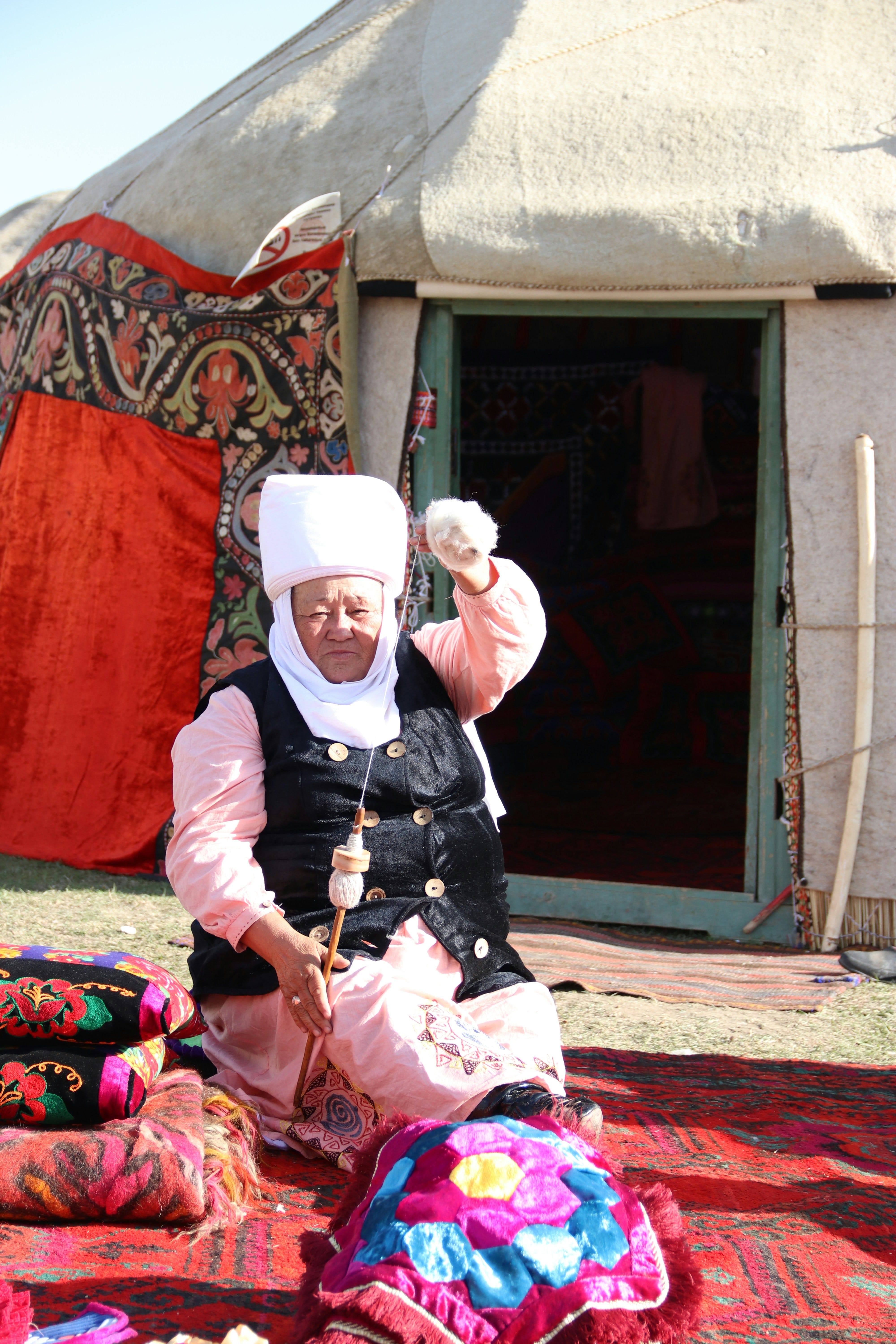
For the art and architecture lover, Karakol offers two unmissable treasures, each a monument to the town’s remarkable ethnic mosaic of Russians, Kyrgyz, Dungans, Tatars, and Uyghurs.
The Holy Trinity Cathedral is a handsome wooden Orthodox cathedral, its poplar-and-brick silhouette rising once more against the sky after decades of neglect. An earlier church here fell in the 1890 earthquake; the graceful wooden cathedral that replaced it in 1895 was stripped of its domes and pressed into service as a club under the Bolsheviks — before being lovingly restored to worship. On a still Sunday morning, its chimes carry across the town.
A few blocks away stands the Dungan Mosque, and there is nothing else quite like it in Central Asia. Built between 1907 and 1910 by a Chinese architect and twenty Chinese artisans for the local Dungan (Hui Muslim) community, it looks for all the world like a Mongolian Buddhist temple — a riot of upturned eaves and painted fruit-and-flower motifs — and was, astonishingly, assembled without a single nail.
For the historian, Karakol’s Regional Museum, housed in a sturdy colonial brick mansion, rewards a slow visit: Scythian bronze artifacts, ancient petroglyphs from near the lake, a candid record of Kyrgyzstan’s union with Russia, and photographs of the old town before the poplars grew tall.
The Sunday Market: Central Asia’s Great Theatre of Commerce
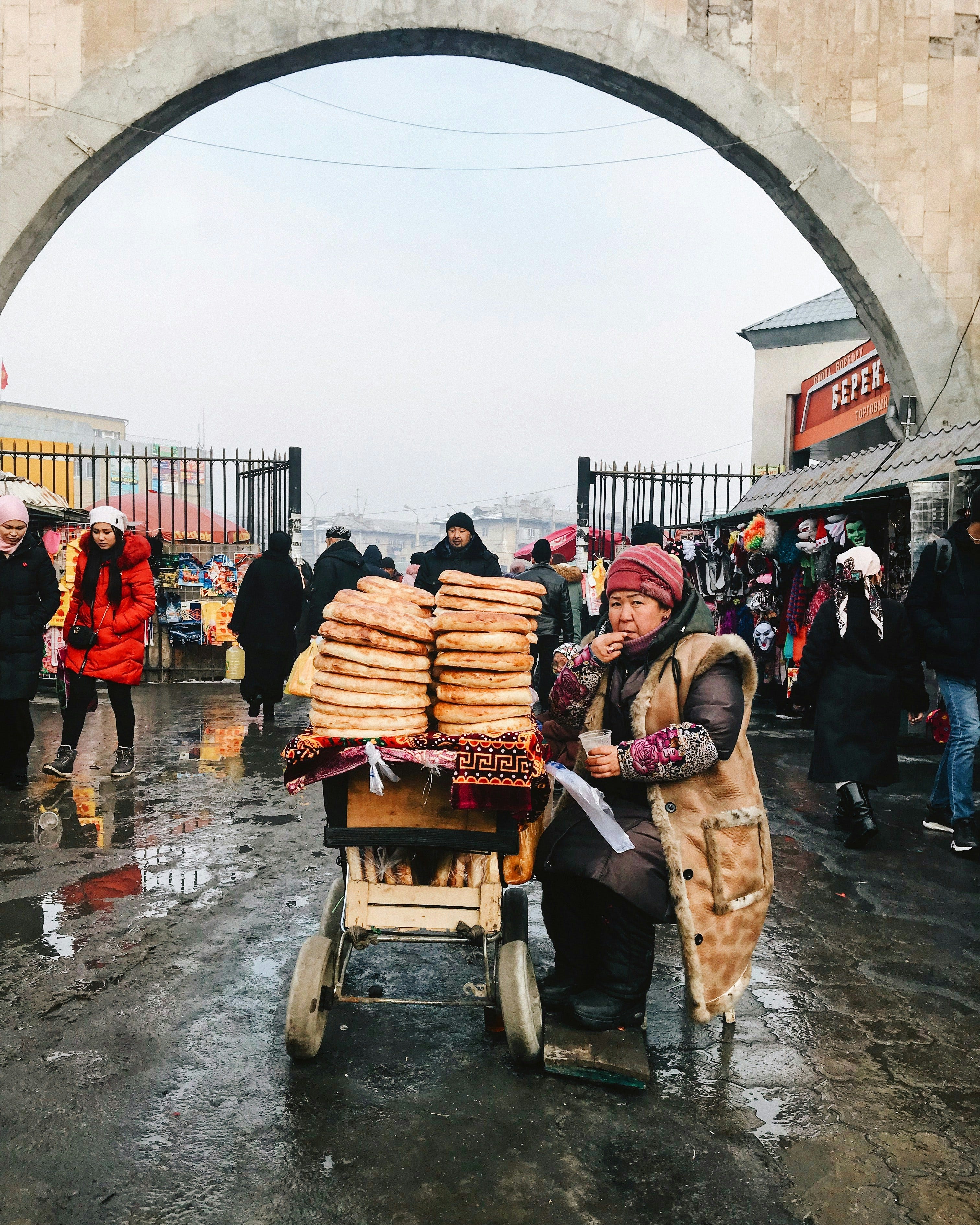
If you come for one thing, come for the Sunday bazaar — one of the last truly great weekly markets in Central Asia. The animal market (mal bazari) in particular is pure spectacle: for several blocks, the ground fills with people from across the region and an array of creatures “you won’t see even in Bishkek.” Horses, cattle, sheep, and more change hands in a swirl of haggling, dust, and centuries-old ritual. Arrive early — trading starts around 5 am and is winding down by 10.
The Mountains Beyond
Karakol has quietly become the headquarters of a new kind of tourism, and geography explains why. It is the finest base on the entire lake for reaching the central Tian Shan. From here the great routes fan out — toward the Inylchek Glacier and mighty Khan Tengri, into the red-rock canyons of Jeti-Öghüz, and up the lush Jergalan valley, tucked into eighty hectares of woods and meadow with its hot mineral baths. Nearer at hand, the beaches, dachas, and gentle waters of Pristan Przhevalsk offer the softer pleasures of a lakeside summer.
Everywhere, apple orchards, white poplars, and the ever-present ridgeline remind you that in Karakol, town and wilderness are never more than a short walk apart.
Travel With Us
JGAH Tours invites Journal of Geography, Art & History readers to experience Karakol and the shores of Issyk-Kul on a specially curated small-group journey — led by experts and locals, not just guides. Our itinerary weaves together the town’s colonial architecture, its extraordinary sacred buildings, the theatre of the Sunday market, and unforgettable days in the high Tian Shan.
Because some places are meant to be studied — and some are meant to be lived.
Reserve your place at Tours.JGAH.com — Kyrgyzstan departures now open.